Anonymous Verified Buyer
" Very responsive and helpful, competitive pricing. Good source! "
July 2025
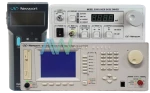
Newport 5030, 3.0 amps, 16-Bit Resolution, Laser Diode Driver

Actual item may vary if no part number is provided on quote request.


✔ 2 Year Warranty Included
✔ Free Domestic Ground Shipping
✔ NIST Calibration Available
Anonymous Verified Buyer
" Very responsive and helpful, competitive pricing. Good source! "
July 2025
Andrew Gar**** Verified Buyer
" Amazing to work with and had my order within 1 week after purchasing with all NI certs and data that were needed. "
March 2025
Said Sai**** Verified Buyer
" Competent contact for highly specialized components. The support team is very knowledgeable. Many thanks for the help and the fast shipping! "
January 2025
Bob C**** Verified Buyer
" Jason was able to get our emergency situation taken care of quickly and professionally. "
May 2025
Gregg Flecki**** Verified Buyer
" Great service and great products. This is my 2nd time using Apex Waves, truly impressed. "
January 2025

Carol Zimme**** Verified Buyer
" Very responsive and helpful, competitive pricing. Good source! "
July 2025
Andrew Gar**** Verified Buyer
" Amazing to work with and had my order within 1 week after purchasing with all NI certs and data that were needed. "
March 2025
Said Sai**** Verified Buyer
" Competent contact for highly specialized components. The support team is very knowledgeable. Many thanks for the help and the fast shipping! "
January 2025
Bob C**** Verified Buyer
" Jason was able to get our emergency situation taken care of quickly and professionally. "
May 2025
Gregg Flecki**** Verified Buyer
" Great service and great products. This is my 2nd time using Apex Waves, truly impressed. "
January 2025
Newport 5030 Laser Diode Driver
The Newport 5030 Laser Diode Driver is a highly precise current source providing 3.0 amps and specifically designed for laser diode characterization and laser diode regulation in industrial, research, and telecommunication uses. It is derived from Newport experience in the 6000 and 8000 series and possesses superior stability in conjunction with negligible noise, thereby providing highly precise output in the form of 3 A required for laser diode performance in extreme conditions. It ensures extensive use of 16-bit resolution and accuracy for precise current and power specifications control through the IEEE-488 or RS-232C interface. Integration with LabVIEW drivers makes it highly usable in automated testing setups and thus allows for programmable control and real-time testing for laser diode performance.
The 5030 laser diode driver features a double-line alphanumeric Liquid Crystal Display (LCD) simultaneously displaying key parameters, such as current modulations (Io and Im), optical power (Po), and forward current (Vf). The optical power is given in Watts, depending upon calibration of monitor photodiode responsivity for efficient power measuring. The unit includes protective functions in setup modes hindering unauthorized configuration variations in parameters, thus avoiding possible laser diode damage caused by sudden transients in voltage, transient contacts, or accidental overloads. Several setups can be memorized and later recalled, thus ensuring consistency across testing cycles. The controls on the front-panel are disabled by a LOCKOUT dial button, thus avoiding accidental changes in running conditions.
An internal sine wave or square wave output is available across a 200 Hz to 300 kHz frequency range for simulation of data communications and telecommunication test tones. The inclusion of external analog modulation allows for user-specified waveforms in constant current (ACC) and constant power (APC) modes. One protective feature includes a sturdy independent current and power limiting, shorting circuits for output, ramping schemes for enablement, and shield cables for minimizing electromagnetic interference. The protective features are vital for ensuring smooth performance in conditions involving excessive external noise.
Engineered for use in automated systems, Newport 5030 maintains all configuration upon power cycling and allows for remote use based on widely established computer interface standards. Its ability to measure laser diode parameters like voltage, current, and optical power makes it especially ideal for quality control in manufacturing processes as much as for use in research and development processes. The programmability, accuracy, and reliability in providing protective functions place Newport 5030 as a key tool for ensuring laser diode reliability and performance across conditions.
| Model | Newport 5030 |
|---|---|
| Model Type | 3.0 A Laser Diode Driver |
| Output Current | 0–3.0 A, low noise |
| Control Resolution | 16-bit precision |
| Interfaces | IEEE-488, RS-232C |
| Display | Two-line LCD (Io, Im, Po, Vf) |
| Function Generator | 200 Hz–300 kHz (sine/squarewave) |
| Modulation Modes | ACC, APC, external analog |
| Protection Features | Current/Power Limits, Slow Start-Up |
| Photodiode Input | Programmable Responsivity (Watts) |
Associated part numbers for Newport 5030:
Delivery:
Eligible returns may be accepted within 30 days at Apex Waves’ discretion. A 25% restocking fee applies; non-refundable and built-to-order products are excluded.
Payment:






Receive Price & Availability Today!
Ask About Our Tiered Calibration Levels
Option & Modules:
Confirm Your Requirements or Versions
Cost & Lead Time Available Upon Request for Service
Repair Evaluation: $150
Common Typos: