


Setup and Optimize the National Instruments PXI-5441 Waveform Generator
Listen to this blog post here. The National Instruments PXI-5441 is a powerful PXI waveform generator designed...
October 25, 2024
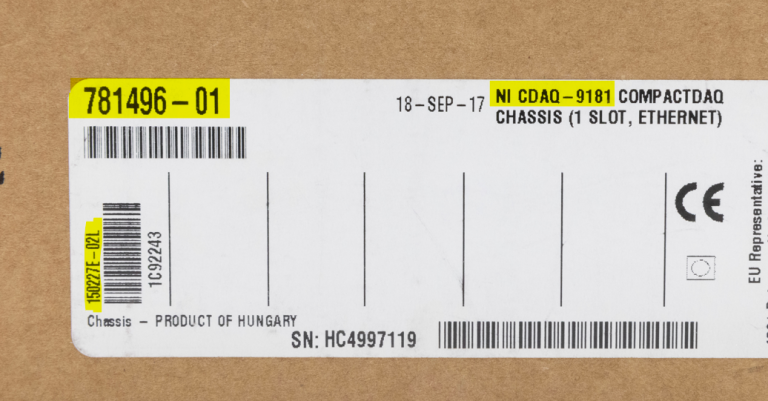






If you have ever found yourself confused by all of the different numbers associated with your NI part and what they signify, you are not alone. With an impressively massive catalog of parts that has only grown over the past few decades, the numbering system established by NI uses many different identifiers out of necessity. In this post, we will break down the most common identifiers and variations for NI parts and explain their significance.
Model Name
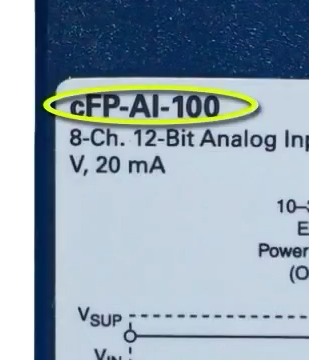
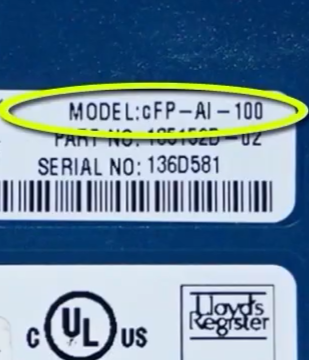
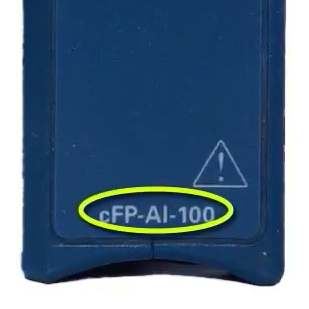
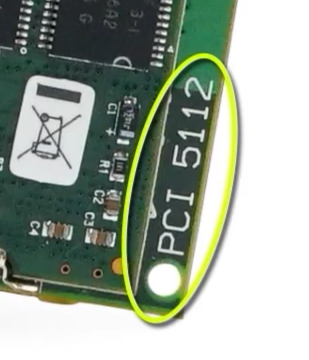
The model name of your part is the identifier used to describe its primary functionality. The model name includes a unique prefix followed by a series of numbers / letters which indicate additional information about the product’s capabilities. For example, the model name cDAQ-9181. The prefix “cDAQ” indicates that this part belongs to the modular CompactDAQ data acquisition platform. By looking at the manual for this model name, we discover that it is in fact a chassis. The suffix number “9181” indicates that this chassis has one slot. By comparison, the cDAQ-9184 chassis has four slots, while the cDAQ-9188 chassis has eight slots.
The model name can be found in different locations, depending on the specific part:


Part Number & Catalog Number
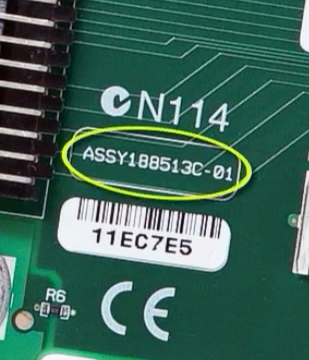
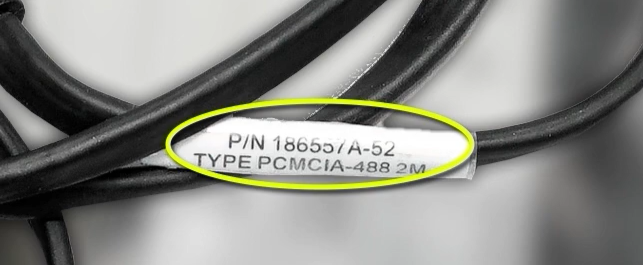
The part number of your product will start with the number “1“, and is a series of numbers that includes a letter before the hyphen. The part number is the identifier used to distinguish variations in the specifications and features between parts, even those with the same model name. The part number is located on the part itself in some way. For example, the listed part number for the cDAQ-9181 is 150227E-02L. This can be found on the different labels on the packaging and the part itself, and it is listed in the official Letter of Volatility from NI for the cDAQ-9181.
Depending on the specific product, the part number can often be found in one of the following places:
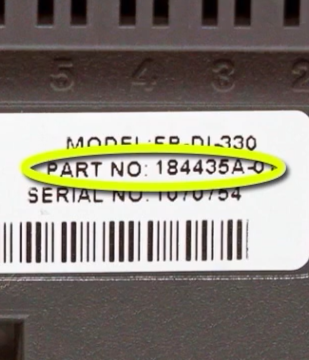
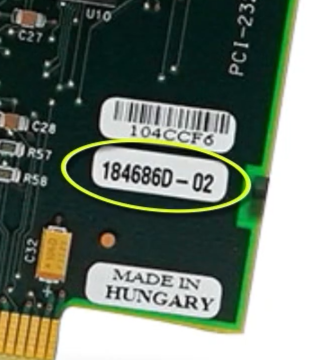


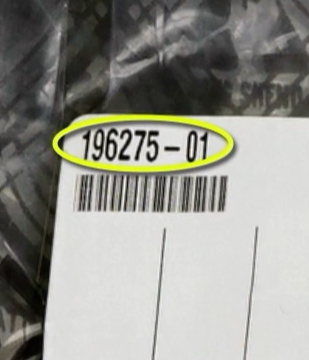
When a part number is missing the letter before the hyphen, it is known as an alternate part number:


Similarly, the catalog number of your product will start with the number “7”, and also serves as an identifying number to differentiate parts of the same model. The catalog number is located on the packaging of the part. For example, the cDAQ-9181 has two listed catalog numbers: 781496-01 and 782052-01. While they share the same model name, these differ in the fact that the 782052-01 version of the cDAQ-9181 is conformal coated, while the 781496-01 is not.
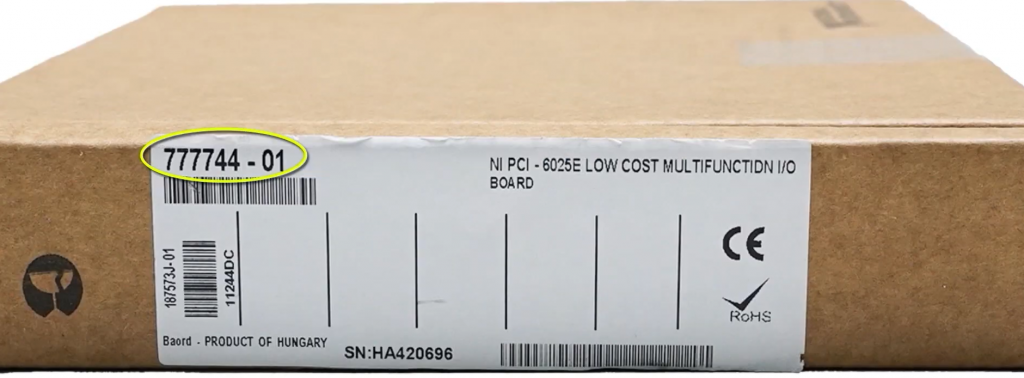
Part numbers and catalog numbers are one of the biggest sources of confusion for customers trying to identify their parts. This is because NI (and as a result, Apex Waves) uses the number that is identified as the “Catalog Number” interchangeably with the term “Part Number”. Because of their large catalog of parts, this approach is easier for NI to attempt to reduce confusion about the specific part that is being referenced / ordered.
If you notice any discrepancies in the definitions between these numbers for a specific part you are looking at on the Apex Waves website, know that untangling the difference between these two numbers for the thousands of parts available is an ongoing puzzle, and one that we are actively working on solving!
Connector Types
The connector of a part refers to the physical connector that is used to join a particular part of NI hardware to another product / instrument. Variations in connection type / specifications can occur across part numbers, as they are each uniquely designed to accommodate different applications and use cases. There is an incredible variety of connector types to choose from, as well as a variety of connector pin counts.
“Connector pins” refers to the individual metal (often gold or silver)l contacts or terminals of a connector that are designed to provide a reliable, safe connection between the NI hardware and other devices. These pins can be described as either male (stick out from the connector) or female (fit into the housing of the connector). They vary in shape, size, and configuration. When trying to identify the connector type of the part you need, first consider the context in which the part will be used, and the surrounding hardware.
Some popular connector types of NI products include: Screw Terminal, Spring Terminal, BNC (Bayonet Neill-Concelman), D-SUB, SMB (SubMiniature B), USB (Universal Serial Bus), GPIB (General Purpose Interface Bus), Ethernet, DIN Rail Mount, and many more.
Accessories
There is no shortage of compatible accessories to go with your part from NI- from cables to terminal blocks. When deciding on an accessory, it is important to consider the connectivity options described above, as well as features such as shielded or unshielded.
Some accessory model names include a suffix that describes additional information regarding the way the part functions. For example; LP (indicates a vertically mounted connector), LPR (indicates a connector mounted at a right angle), FV (indicates a vertically mounted connector that mounts vertically on a DIN rail), FH (indicates a vertically mounted connector that mounts horizontally on a DIN rail), etc.
The more specific information you can provide when submitting a quote to Apex Waves, the easier it is to track down the exact part you need! Once you select the “Quick Quote” button in the site header or the “Get Pricing” button on any part page on apexwaves.com, you will be directed to our convenient quote form.

If you have the specific part or catalog number, feel free to add it! While it is not required, it is incredibly helpful when determining the part specifications to fit your needs, as many model names have multiple part numbers.

If you have any additional information that would be helpful for identifying the specific part you need; such as the context / application in which it will be used, the connector type you need, or even if you need it calibrated to manufacturer specifications prior to shipment, let us know here in that “additional information” field!
ADDITIONAL RESOURCES:
A monthly email packed with valuable content—industry news, tutorials, obsolescence updates, and more. No sales pitches, just insights we think you'll find helpful!
Listen to this blog post here. The National Instruments PXI-5441 is a powerful PXI waveform generator designed...
Click here to listen to this post. Companies in almost every industry are being transformed...
Listen to this post here. The PXIe Platform from National Instruments offers an incredibly valuable toolset for...

Click here to listen to this post instead. It is no secret that simulation and...