


Setup and Optimize the National Instruments PXI-5441 Waveform Generator
Listen to this blog post here. The National Instruments PXI-5441 is a powerful PXI waveform generator designed...
October 25, 2024







The revolutionary goal of NASA’s Artemis missions is to pave the way for future lunar surface missions and long-term lunar exploration. For the aerospace engineers preparing for the mission with a potential launch date only a few weeks away, “out of stock” is simply not an option when parts are urgently needed. By quickly shipping sound and vibration modules directly to NASA, Apex Waves is providing support for the mission’s ground support.
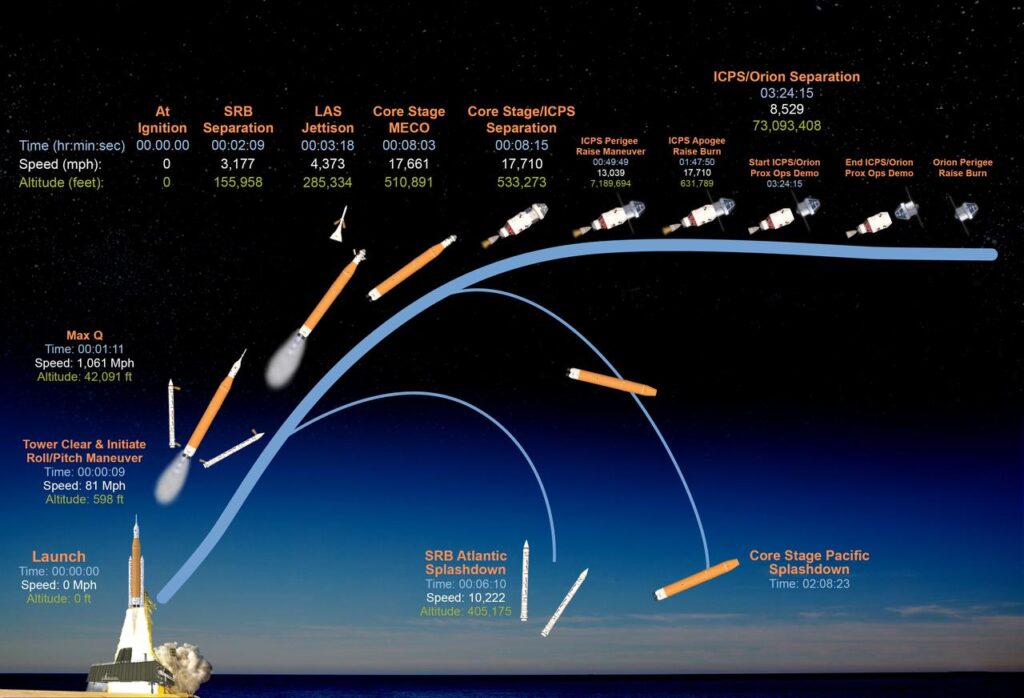
It has been over 50 years since humans last visited the moon, and NASA’s Artemis Program is paving the way for a return. Unlike the Artemis I mission, which was unmanned, Artemis II will transport four highly trained astronauts on a historic test flight around the moon. The challenge for commander Reid Wiseman, pilot Victor Glover, and mission specialists Christina Koch and Jeremy Hansen will be to verify that every system of the Orion spacecraft functions as intended in deep space.
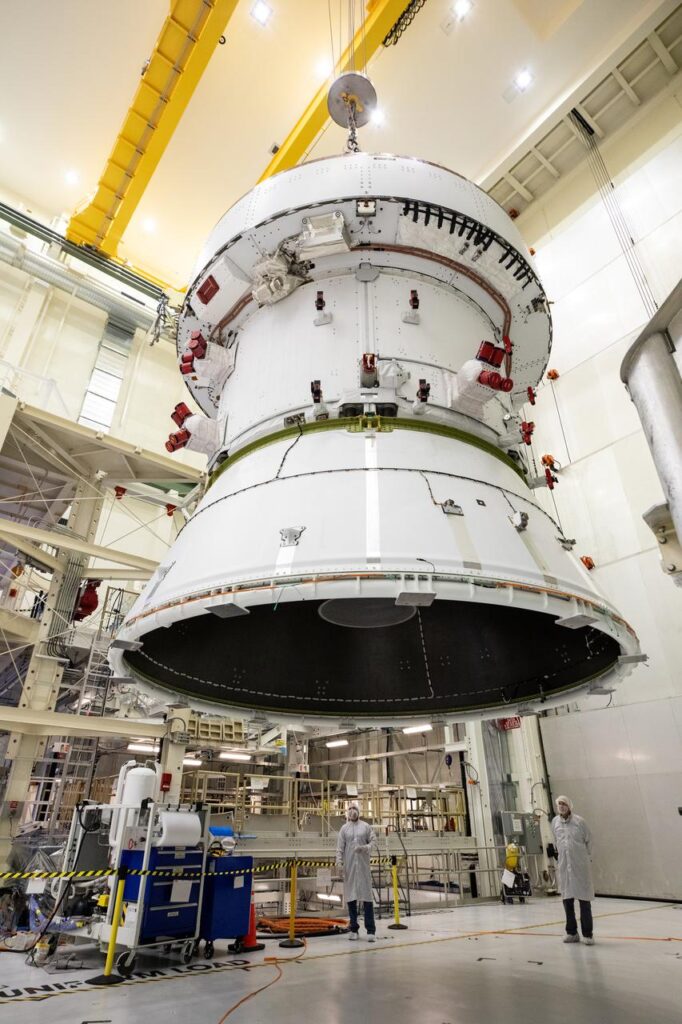
The Orion consists of three main sections: the crew module, the service module, and the spacecraft adapter. The crew module is pressurized, providing the sustainability needed for the crew to live comfortably during their journey. The service module offers life support systems, such as water, oxygen, and nitrogen, as well as propulsion, thermal control, and the electrical power produced by the solar arrays. Finally, the spacecraft adapter is what attaches Orion to the Space Launch System heavy-lift rocket.
Throughout their journey, the astronauts will assess the spacecraft’s systems, including testing the radiation shelter and practicing emergency protocols. Their findings will help lay the groundwork for the first crewed flights to Mars!
The Artemis II mission is planned to last 10 days, traveling in a figure-eight-shaped path to the far side of the moon. At the farthest point, the crew will reach a distance of about 230,000 miles away from Earth. The flight trajectory is designed to be fuel efficient, using the Earth-Moon gravitational field to bring the Orion back to Earth in a natural free fall.
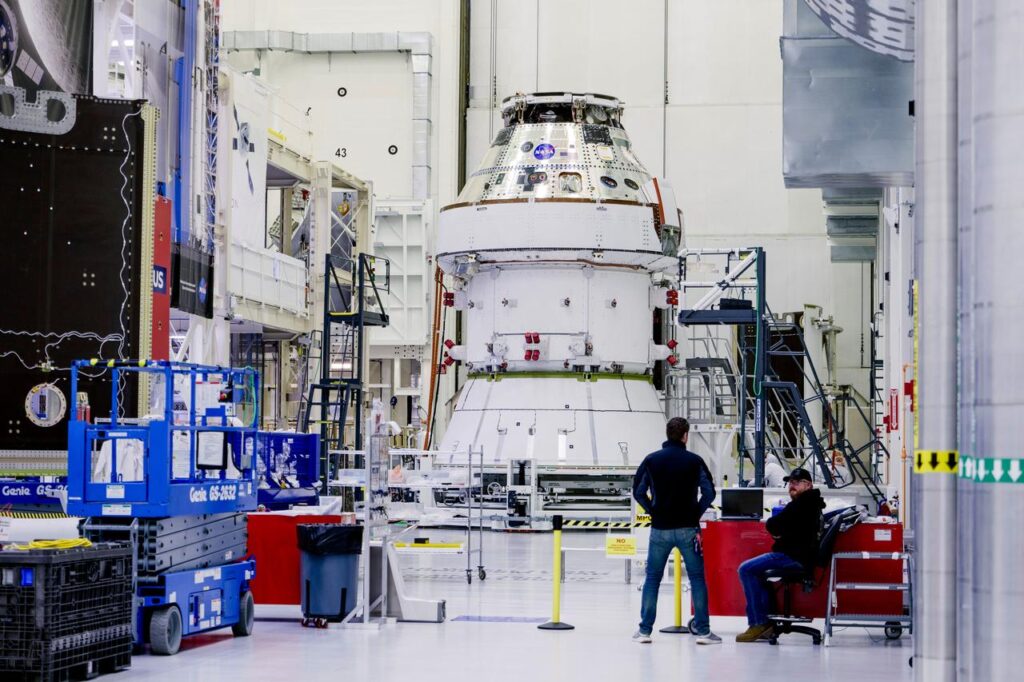
The re-entry through Earth’s atmosphere will be intense, with the crew experiencing high speeds and incredibly high temperatures before landing in the Pacific Ocean. When developing the spacecraft to face extreme environmental factors such as these, precision and accuracy are absolutely vital.
Two of the most important considerations when designing aerospace systems are noise and vibration. These factors not only affect overall system reliability, but also the performance and comfort of the crew. Excessive noise can make passengers and operators uncomfortable, while unwanted vibrations can harm and shorten component life.
NASA’s test systems are often run on older, validated architectures. These proven systems should not be changed just because a part has reached End-of-Life (EOL) status. When specific sound and vibration modules were needed quickly, NASA turned to Apex Waves to fill in the gap.
These modules will work together with existing systems for sound and vibration analysis, supporting the necessary pre-flight testing and validation processes. The information gathered by sound and vibration module measurements informs decisions that keep both the hardware and the crew safe throughout every phase of the launch.
For Apex Waves, the opportunity to aid the Artemis II mission showcases our ability to effectively support mission readiness for vital NASA systems. This moment is a reflection of what we do every single day, supporting teams and engineers who work on the cutting edge of research and innovation by extending the life of their test systems and allowing them to feel highly confident in their testing.
The sound and vibration modules requested to assist the Artemis II had already been fully tested prior to going on our shelves, ensuring that they were in stock and ready to ship as soon as we got the call. Our proven commitment to our customers and diverse inventory allows us to assist with test equipment needs of any size, from a warehouse to the moon.
Currently anticipated to launch in 2027, Artemis III will take lessons learned from the first two Artemis missions to make a long-awaited return to the moon’s surface. The crew of Artemis III, however, will make history by being the first to investigate the areas close to the lunar South Pole. This region’s distinctive and previously unexplored features could lead to entirely new and exciting deep space scientific findings!
A monthly email packed with valuable content—industry news, tutorials, obsolescence updates, and more. No sales pitches, just insights we think you'll find helpful!
Listen to this blog post here. The National Instruments PXI-5441 is a powerful PXI waveform generator designed...
Click here to listen to this post. Companies in almost every industry are being transformed...
Listen to this post here. The PXIe Platform from National Instruments offers an incredibly valuable toolset for...

Click here to listen to this post instead. It is no secret that simulation and...