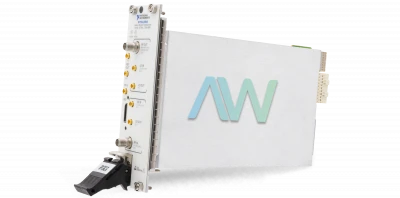
PXIe-5840
PXI Vector Signal Transceivers
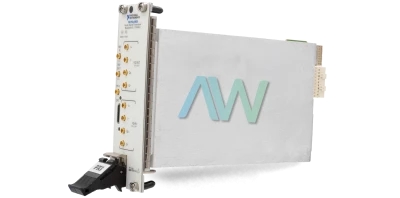
- NI PXIe-5840 Vector Signal Transceiver with 1 GHz Bandwidth
Calibration4 options
In Stock | Ships Today

Shop NI vector signal transceivers and National Instruments VST hardware for RF generation, analysis, prototyping, and wireless test systems.

Browse the models highlighted for this page, then request a quote for the exact National Instruments hardware you need.
PXI Vector Signal Transceivers
PXI Vector Signal Transceivers
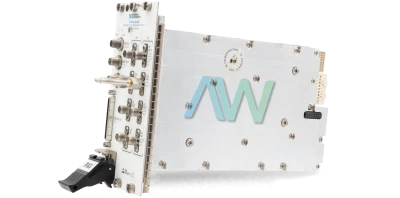
PXI Vector Signal Transceivers
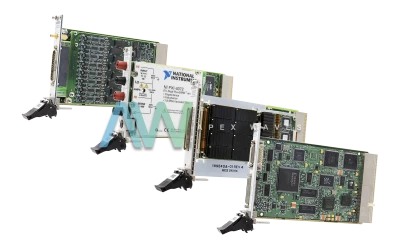
PXI Vector Signal Transceivers
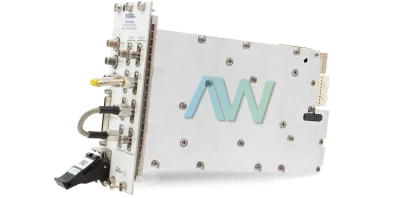
PXI Vector Signal Transceivers
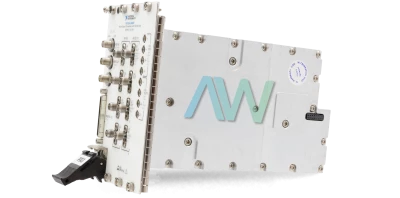
R Series
PXI Vector Signal Transceivers
NI Vector Signal Transceivers combine signal generation, signal analysis, and FPGA processing in a modular test instrument. Commonly called VSTs, these devices let engineers stimulate a device under test and measure its response within one platform. Their integrated architecture supports RF characterization, wireless validation, production testing, and applications requiring tightly coordinated transmit and receive operations. For organizations maintaining established automated test systems, choosing the correct VST means matching both measurement requirements and the existing software environment.
The first-generation PXIe-564xR family includes the PXIe-5644R, PXIe-5645R, and PXIe-5646R. These models cover RF frequencies from 65 MHz to 6 GHz. The PXIe-5644R and PXIe-5645R provide 80 MHz of instantaneous bandwidth, while the PXIe-5646R increases that capability to 200 MHz. Their programmable FPGA architecture supports customized processing, triggering, and control, making these instruments relevant to specialized test sequences and established RF platforms.
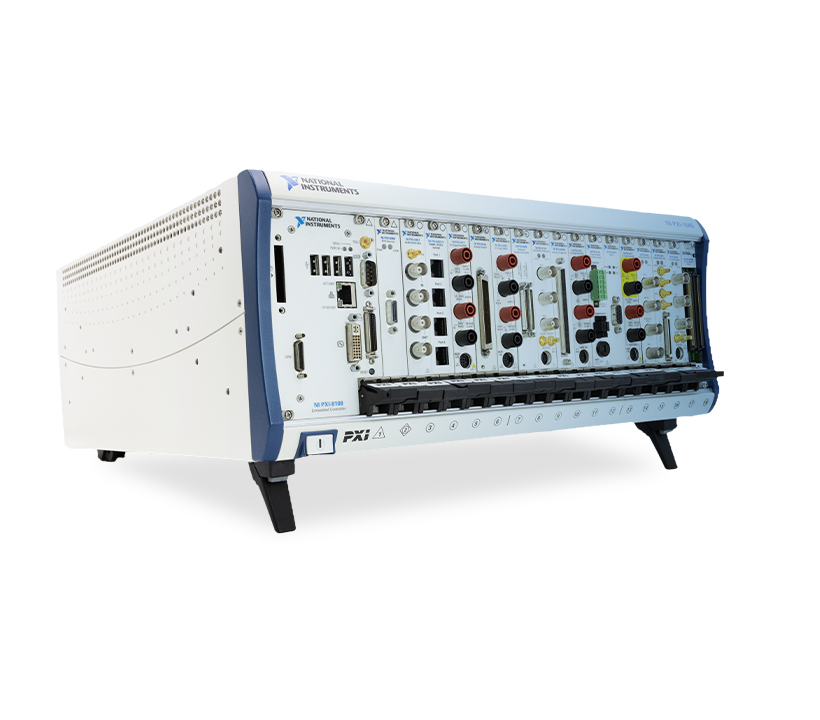
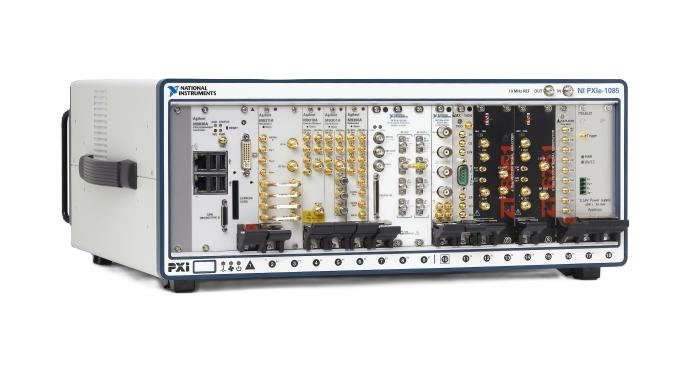
Later families expand bandwidth and application coverage. The second-generation PXIe-5840 provides 1 GHz of instantaneous bandwidth and RF coverage up to 6 GHz. The PXIe-5841 offers configurations with up to 1 GHz bandwidth; part number 786982-01 identifies a 6 GHz, 1 GHz bandwidth configuration with both analysis and generation. The third-generation PXIe-5842 includes part number 789600-26211, a 26.5 GHz configuration with 2 GHz bandwidth and both functions. Other PXIe-5842 configurations offer different frequency and bandwidth options, so the complete ordering number matters.
Not every VST serves the same signal domain. The PXIe-5820 is a baseband instrument with 1 GHz complex I/Q bandwidth, while PXIe-5831 configurations extend RF testing into millimeter-wave bands. Frequency coverage identifies where an instrument operates; instantaneous bandwidth describes the signal span it can generate or acquire without retuning. Neither specification should be substituted for the other when comparing models.
Software is equally important. NI-RFSA and NI-RFSG provide acquisition and generation control, while compatible RFmx applications support measurements for general-purpose RF and wireless standards. Standard operation does not require developing custom FPGA code. Advanced customization depends on the VST generation, supported development tools, and the availability of appropriate FPGA extensions or libraries.
Typical measurements include output power, occupied bandwidth, adjacent channel power, and error vector magnitude. These results help engineers evaluate amplifiers, transceivers, and other RF components. Multichannel systems can also coordinate multiple instruments for MIMO testing, provided the selected hardware supports the required timing and local oscillator connections. A higher-performance replacement should still be validated against existing test limits and documented acceptance criteria before deployment.
Before selecting replacement hardware, check the PXI Express chassis, available slot space, cooling capacity, controller throughput, operating system, and driver versions. Review RF input limits, required cables, synchronization connections, and calibration documentation. Contact Apex Waves with the full model and part number, application requirements, and installed software versions to discuss suitable sourcing options.
Continue browsing related National Instruments buying pages and hardware groups.
Buy NI CAN bus interfaces and National Instruments CAN hardware for automotive, embedded, industrial, and diagnostic applications.
Browse NI CAN Bus InterfacesShop NI DAQ hardware and National Instruments data acquisition devices, including USB, PCI, PXI, PXIe, and CompactDAQ systems.
Browse NI DAQ HardwareShop NI data acquisition systems and National Instruments DAQ systems, including USB DAQ, PCIe DAQ, PXI DAQ, and CompactDAQ hardware.
Browse NI Data Acquisition SystemsShop NI digitizers and National Instruments high-speed digitizer hardware for PXI, PXIe, waveform capture, and automated test systems.
Browse NI DigitizersShop NI FPGA and RIO hardware, including National Instruments CompactRIO, Single-Board RIO, R Series, and FPGA modules.
Browse NI FPGA & RIO HardwareShop NI FPGA hardware and National Instruments FPGA modules, including R Series, PXI FPGA, PXIe FPGA, and reconfigurable I/O hardware.
Browse NI FPGA HardwareBrowse NI modules and cards from National Instruments, including DAQ cards, PXI modules, CompactDAQ modules, CAN interfaces, and digital I/O hardware.
Browse NI Modules & CardsBuy NI PXIe chassis and National Instruments PXIe chassis hardware for high-bandwidth modular test and RF systems.
Browse NI PXIe ChassisBuy NI PXIe controllers and National Instruments PXIe embedded controllers for high-performance modular test systems.
Browse NI PXIe ControllersBuy NI PXIe digitizers and National Instruments PXIe high-speed digitizer hardware for waveform capture and advanced test systems.
Browse NI PXIe DigitizersBuy NI PXIe modules and National Instruments PXIe cards for RF, digitizer, DAQ, SMU, switching, and high-speed test applications.
Browse NI PXIe ModulesBuy NI PXIe oscilloscopes and National Instruments PXIe scope hardware for high-speed waveform capture and automated test systems.
Browse NI PXIe OscilloscopesBuy NI PXIe power supplies and National Instruments PXIe power hardware for modular test systems and PXIe chassis support.
Browse NI PXIe Power SuppliesShop NI PXIe systems, chassis, controllers, and modules. Apex Waves offers tested National Instruments PXIe hardware for high-performance test systems.
Browse NI PXIe SystemsShop NI PXIe vector signal transceivers and National Instruments VST hardware for RF generation, analysis, and wireless testing.
Browse NI PXIe Vector Signal TransceiversBuy NI RF and SDR systems, including National Instruments USRP devices, RF analyzers, VST modules, and software defined radio hardware.
Browse NI RF & SDR SystemsBuy NI RF signal analyzers and National Instruments RF analyzer hardware for spectrum analysis, wireless testing, and PXI RF systems.
Browse NI RF Signal AnalyzersBuy NI strain gauge modules and National Instruments bridge input modules for load cell, force, torque, and structural testing applications.
Browse NI Strain Gauge ModulesBrowse NI test and measurement equipment from National Instruments, including DAQ systems, PXI hardware, oscilloscopes, digitizers, and RF modules.
Browse NI Test & Measurement EquipmentShop used National Instruments equipment and refurbished NI hardware, including DAQ, PXI, PXIe, CompactDAQ, and CompactRIO systems.
Browse Used National Instruments EquipmentQuality processes backed by documented inspection, testing, and fulfillment standards.
Connected to the standards group supporting modular instrumentation platform compatibility and growth.
Each available unit is inspected and tested for dependable operation before shipment.
Our team helps match models, part numbers, replacements, and compatible alternatives.
Explore nearby National Instruments families and related hardware.