


Setup and Optimize the National Instruments PXI-5441 Waveform Generator
Listen to this blog post here. The National Instruments PXI-5441 is a powerful PXI waveform generator designed...
October 25, 2024
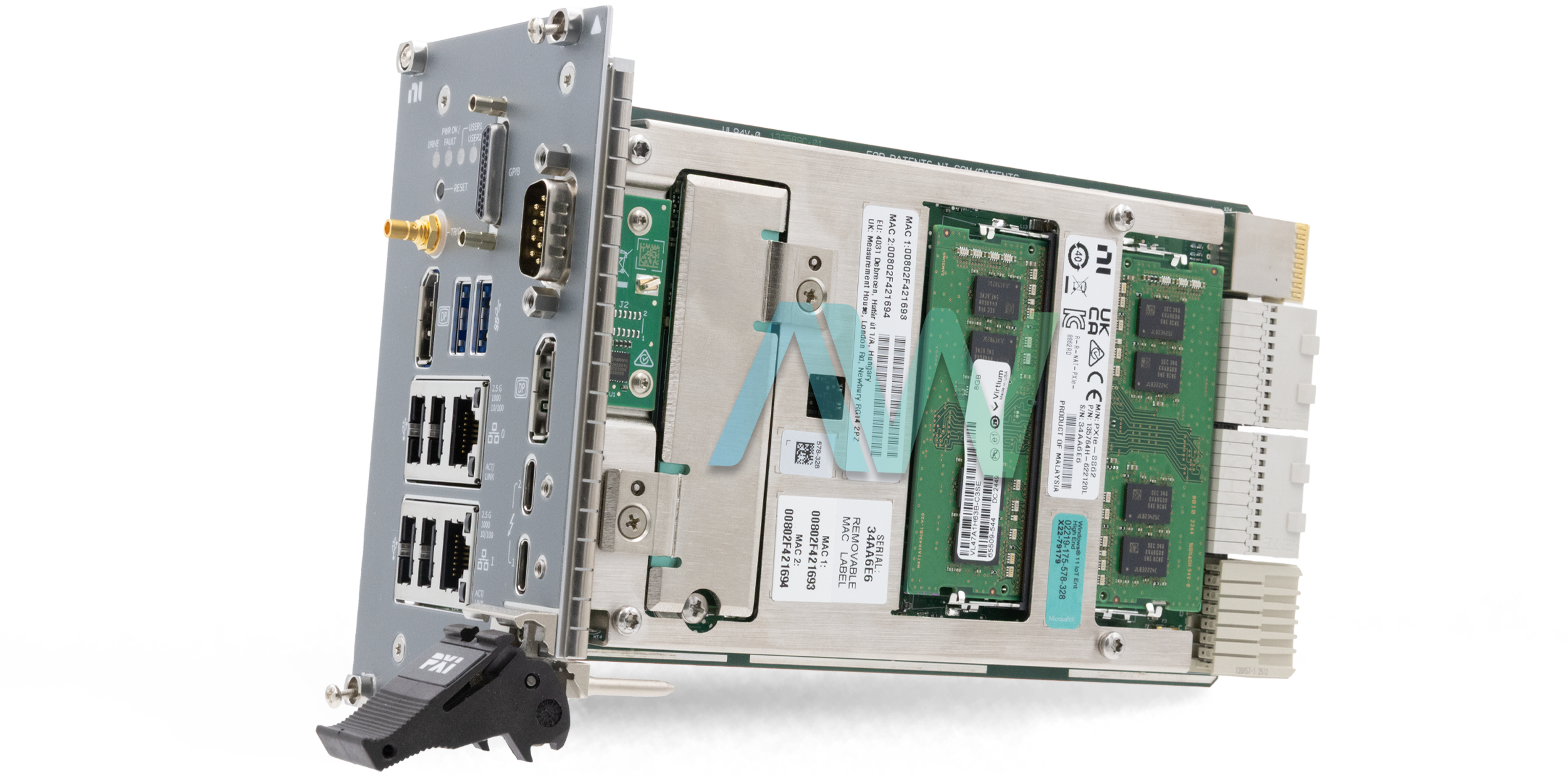






The modular PXI platform provides accurate timing synchronization and quick data transfer rates for a wide range of test and measurement applications. Because these components can be integrated into a single system with ease, there are countless options for creating your perfect PXI measurement solution. In a recent webinar, NI/Emerson engineers showcased some of their newest solutions for reasonably priced platform on-ramps. Let’s take a closer look at each one!
The PXI platform has three main components: a chassis, a controller, and modules. The controller acts as a computer, operating as the “brain” behind the data flow of the modular system. The controller is responsible for making sure the modules run in unison, while the modules themselves are responsible for carrying out specific functions. The chassis houses everything together, establishing communication with (and supplying power to) every module.

In the past, 18-bit products were all PXI. With these 18-bit PXIe DAQ Devices, NI is bringing increased functionality to the newest generation! One of the standout benefits of these new devices is the low-noise design, which is made possible with a 40k filter. With both low noise and high resolution, the PXIe-6381 (part number 790689-01) and PXIe-6383 (part number 790690-01) have an analog filter that can either be enabled or disabled.
There are also new software features available for these devices. InstrumentStudio now has support for DAQ analog input, including the ability to save and share configurations with your team as well as troubleshoot your instrument.
During the NI Webinar, it was mentioned that InstrumentStudio does not replace MAX. Instead, it is compared to the knobs and viewers that you would normally see on boxed instruments. It is an excellent choice for starting software development and can be used to debug a test system that is built on PXI.
The main difference between the two variations of this oscilloscope is the number of channels. Part number 790584-01 of the PXIe-5108 has 4 channels, while part number 790585-01 has 8 channels. This model boasts a bandwidth of 100 MHz and a resolution of 14 bits. By using InstrumentStudio, multiple PXIe-5108s can be connected and synchronized. The device is also supported in LabVIEW RT.
Multi-Record Fetch
With this feature, NI PXIe oscilloscopes can record several triggered events in a single acquisition session. The NI-SCOPE driver keeps all of the collected records in memory and retrieves them all at once via a single API call, as opposed to retrieving each record separately. As a result, communication overhead is decreased and overall data throughput is increased.
When synchronizing multiple instruments, all of the modules must be the same type (for example, all PXIe-5108s), and they must all be located within the same chassis.
The PXIe-1081 (part number 790631-01) is designed with 17 hybrid slots, meaning that it is compatible with both older and newer PXI modules. Perfect for use with both remote and embedded controllers, this chassis uses a Thunderbolt connection to connect to a laptop. The slot cooling capacity of 58 W provides cooling distribution to keep each module operating at optimal temperatures. This offers the mechanical support needed to secure each module and protect them from external forces and mechanical stress.
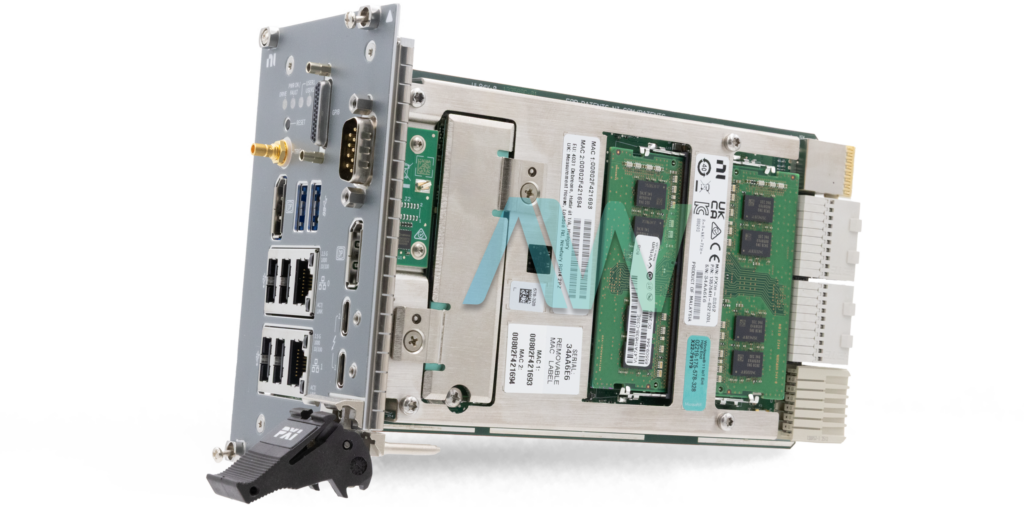
Controllers are necessary components of the PXI system, because modules are PC devices and therefore need a PC to function.
Functionally, PXI controllers are similar to laptops that have been designed to fit in a PXI chassis. They run the Windows operating system, connect to USB devices, have DisplayPorts, and more. Available with or without GPIB options, the PXIe-8842 and PXIe-8862 controllers have removable drives. These controllers are available under a wide variety of part numbers in multiple configurations, mainly differing in the operating system that is installed. Designed for high performance with lower cost, they are equipped with Intel Core Processors.
These embedded controllers are optimized for connectivity. The PXIe-8842 features two i225 Ethernet ports, a mini-GPIB port, a DisplayPort, four USB 2.0 ports, an SMB connector, a single Thunderbolt 4 Type-C port, two USB 3.0 ports, and a DB-9 serial port.
The PXIe-8862 is equipped with a GPIB connector, an RS-232 Serial Connector, an Ethernet port, a USB 2.0 port, a USB 3.2 port, and two DisplayPorts.
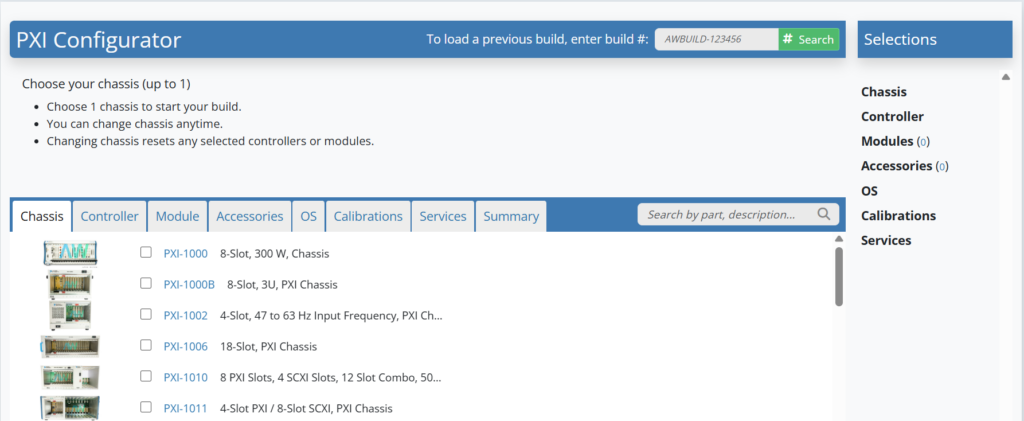
At Apex Waves, we offer a convenient online tool for configuring your PXI system! The PXI Configurator uses both PXI and PXIe modules, and will alert you if any of your choices are incompatible. This user-friendly tool allows you to select your preferred chassis, controller, modules, and operating system, with options for in-house or NIST-traceable calibration services for any applicable parts. We also offer specialized service plan packages to give you peace of mind with your build.
A monthly email packed with valuable content—industry news, tutorials, obsolescence updates, and more. No sales pitches, just insights we think you'll find helpful!
Listen to this blog post here. The National Instruments PXI-5441 is a powerful PXI waveform generator designed...
Click here to listen to this post. Companies in almost every industry are being transformed...
Listen to this post here. The PXIe Platform from National Instruments offers an incredibly valuable toolset for...

Click here to listen to this post instead. It is no secret that simulation and...