


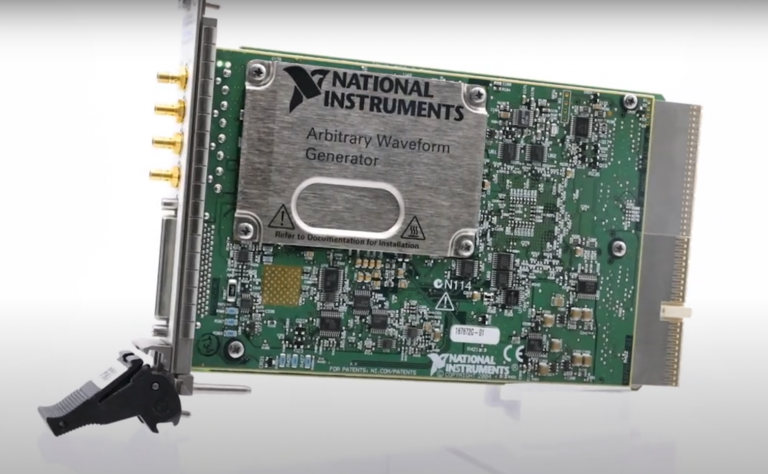
Setup and Optimize the National Instruments PXI-5441 Waveform Generator
Listen to this blog post here. The National Instruments PXI-5441 is a powerful PXI waveform generator designed...
October 25, 2024






The last manned mission to the moon was the Apollo 17 in 1972. Over 50 years later, NASA’s Artemis program has opened the door for long-term lunar exploration and future lunar surface missions. With the launch of the Artemis II, ideas that once seemed out of reach (think missions to mars or established moon bases) will soon become a lot more realistic. Let’s go over everything that you need to know about this historic mission around the moon!
The Artemis II mission is the second out of five planned missions in NASA’s Artemis program. The first mission, Artemis I, launched in 2022 and lasted for 25 days. Throughout this journey, the unmanned Orion spacecraft flew beyond the moon for thousands of miles after launching from the Space Launch System (SLS) rocket, which is NASA’s newest heavy-lift rocket.
Artemis II will mark the first crewed mission of the program, with four skilled and highly trained astronauts embarking on a test journey around the moon. The Orion will be carried into orbit by the Space Launch System, and it will transport and sustain the crew to ensure their safe return to Earth. The mission is planned for 10 days, with a figure-eight trajectory circling around the far side of the moon and traveling roughly 250,000 miles from Earth at the farthest point.
Throughout the excursion, the astronauts on board will gather information about the spacecraft’s capabilities and about the lunar surface. This flight will help verify that all of Orion’s spacecraft systems function as intended when people are on board in the deep space environment. At the conclusion of this informative mission, the Orion will make use of the Earth-Moon gravitational field to return to Earth in a fuel-efficient natural free fall.
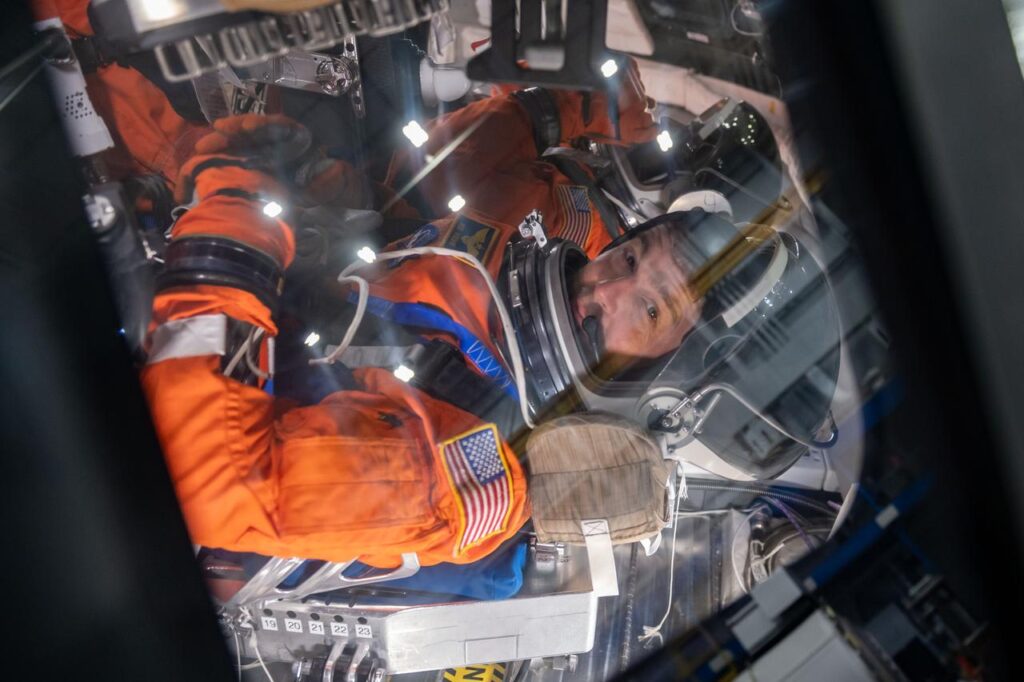
The goal of the Artemis program is to achieve a crewed lunar landing by 2028, creating the stepping stones needed to ultimately pave a way for traveling to Mars.
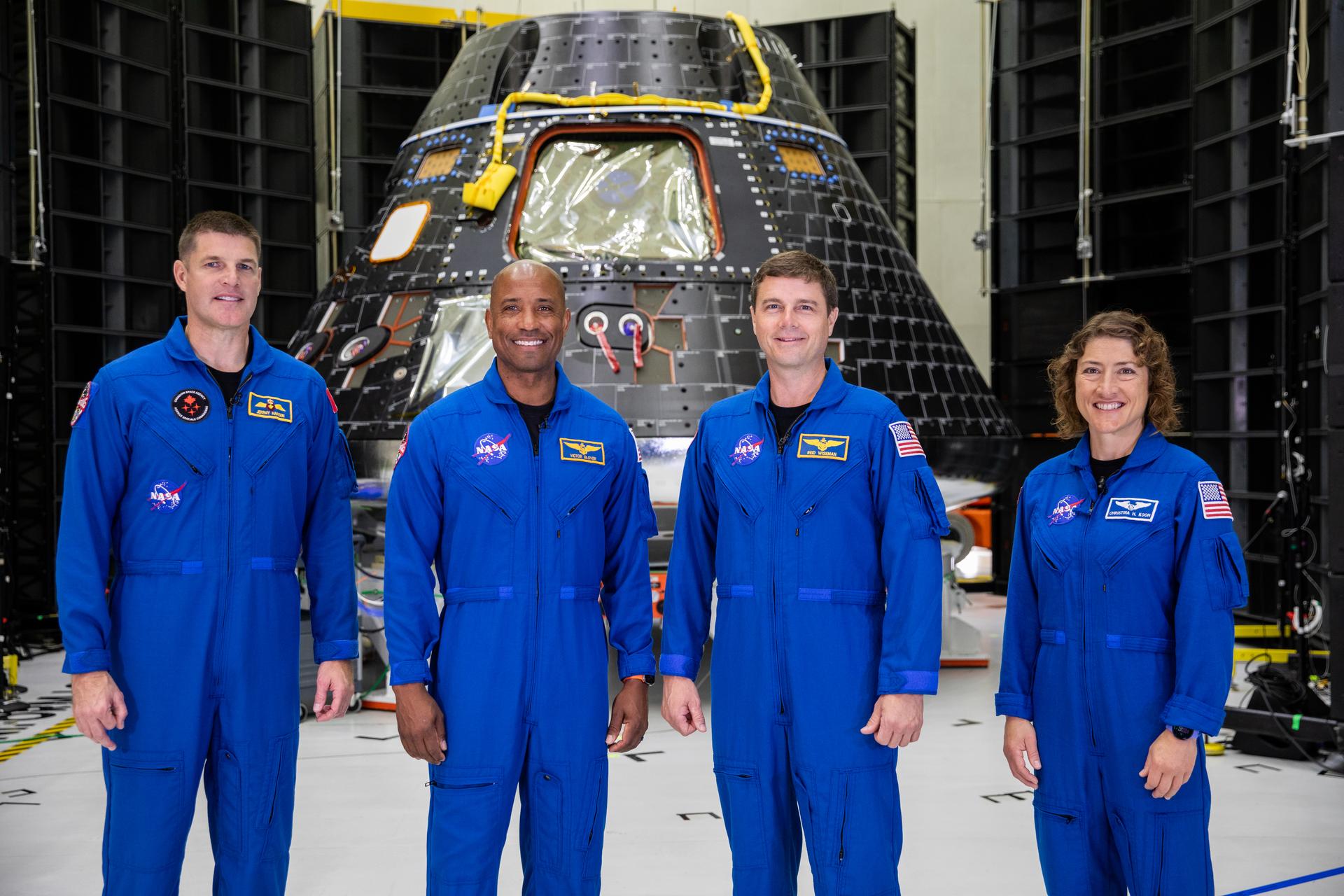
The four astronauts of the crew represent a new era of space exploration.
● Reid Wiseman (Commander): the former chief of the Astronaut Office, Wiseman is also a former pilot and U.S. Navy veteran. He completed astronaut training in 2011 before serving as the flight engineer for Expedition 41 aboard the International Space Station (ISS). At 50 years old, Wiseman will become the oldest individual to make the lunar trip.
● Victor Glover (Pilot): Since completing his astronaut training in 2013, Glover has been awarded with multiple honors including the Distinguished Service and Space Exploration medals from NASA. With the Artemis II mission, he will become the first person of color to travel to the Moon.
● Christina Koch (Mission Specialist): Koch previously took part in the first all-female spacewalk and set a new record for the most consecutive days in space by a woman after spending an astonishing 328 total days in space. Koch is an NC State alumni and set to become the first woman to ever travel to the Moon.
● Jeremy Hansen (Mission Specialist): Hansen will become the first Canadian/non-American to make the journey to the moon. A representative of the Canadian Space Agency (CSA), he was previously the first Canadian to oversee the training of candidates from both the US and Canada in a NASA astronaut class.
Another record set to be broken by the Artemis II is that of distance. The current record for distance traveled by humans from Earth is held by Apollo 13 at 248,655 miles. The Artemis II crew, while “slingshotting” around the dark side of the moon to maintain the figure-eight trajectory for the return home, expect to reach a maximum distance of 250,000 miles. This will break the record by over 1,000 miles.
How will they communicate with Earth?
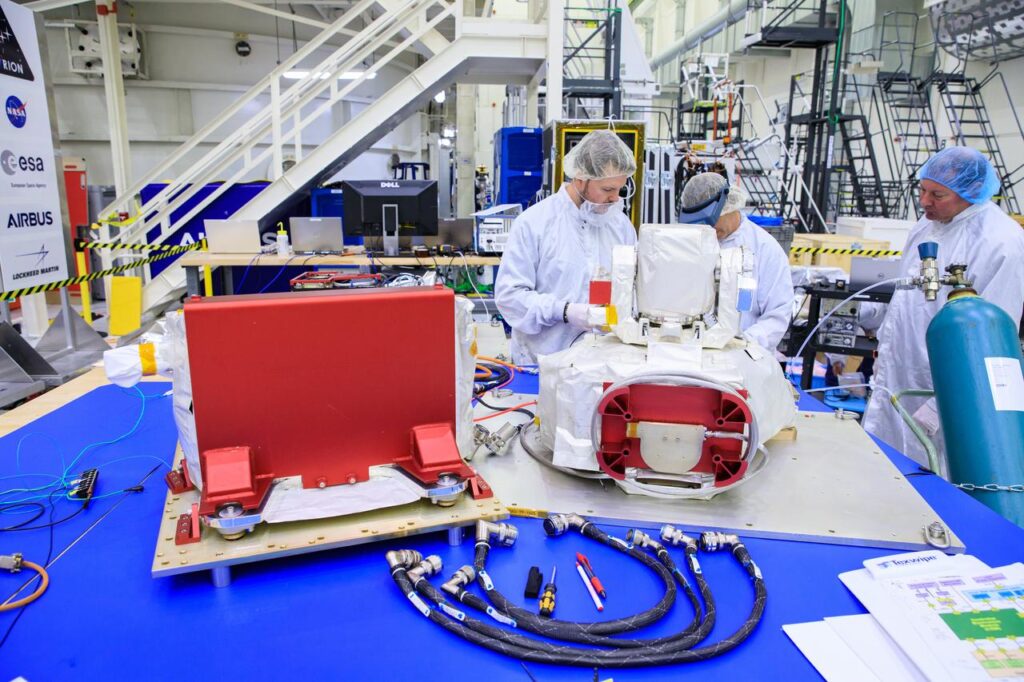
One of the most important considerations for a fact-finding mission is ensuring that the data can be reliably sent back to researchers on Earth. The main way that the Artemis II crew will communicate is by using NASA’s Deep Space and Near Space Networks, but the Orion will also test out the Optical Communications System (O2O). This system uses lasers to transmit high-definition data back to Earth, demonstrating the ability to use infrared light to send and receive more data than conventional radio communication systems can. While both radio waves and infrared waves move at the speed of light, infrared has a higher frequency and is more effective at transferring data because it can send more information over a single link. Payloads for laser communications can offer missions higher data speeds while requiring less power and weight.
What will the astronauts eat?
The astronauts aboard the Artemis II will enjoy 189 different menu items during their 10 day mission, including more than 10 beverage options. Since the Orion does not have refrigeration capabilities, all of the food must be safe, shelf-stable, and simple to prepare and eat. All of the meals have been carefully planned to meet the caloric, nutrient, and hydration requirements to promote crew well-being and productivity. The food found on the Orion has to either be irradiated, thermostabilized, rehydratable, or ready to eat. The crew can use a small, briefcase-style food warmer to reheat meals as needed, and they can rehydrate foods using the spacecraft’s potable water dispenser.
Who is the “Moon Mascot”?
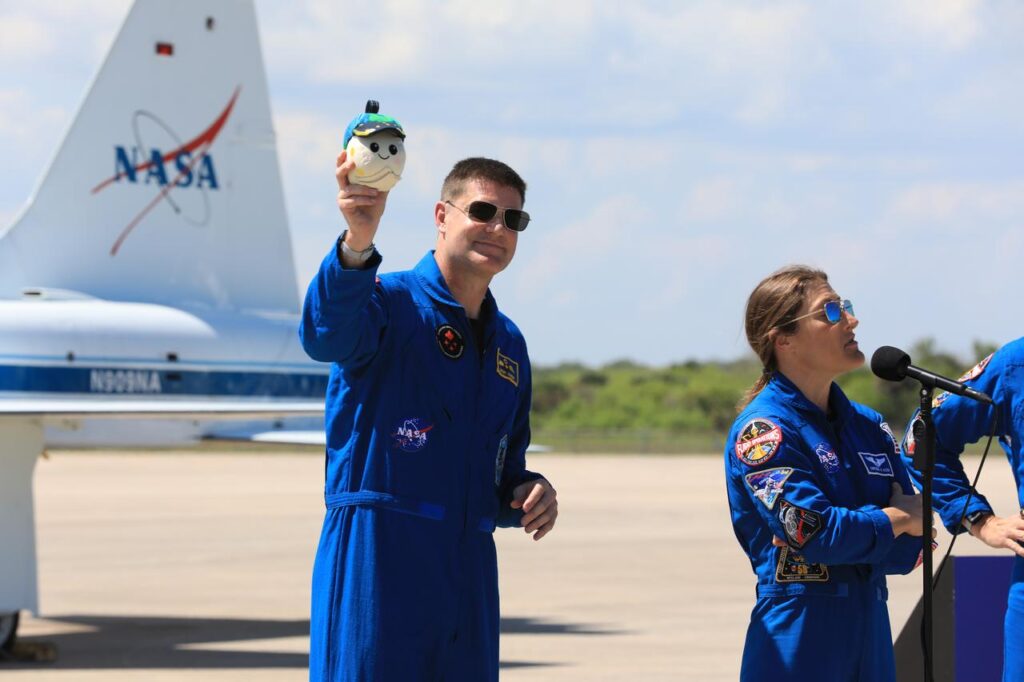
NASA held a contest for the public to submit designs for the Artemis II zero-gravity indicator, which is a small plush toy that will join them in orbit and indicate when they have fully made it into space. The winner of this contest was a second-grade student named Lucas Ye from California, whose design was inspired by the famous “Earthrise” photo captured during the Apollo 8 mission. Appropriately, this mascot was given the name Rise.
Launch: The Orion will launch from the SLS rocket, entering into orbit around the Earth while checking systems. The astronauts will fire an additional engine to put them in the right path for Day 2.
Day 2: The translunar injection burn (TLI) will occur, providing up to 6,000 pounds of thrust for their trajectory.
Days 3-4: Space travel, demonstrations, practices, and observations.
Day 5: The Orion will enter into the Moon’s gravitational pull, and the crew will test out their spacesuits.
Day 6: The crew will come the closest to the Moon, recording data and taking photos and videos. They will temporarily lose all communication with the Earth and Mission Control while passing on the far side of the Moon.
Days 7-9: Space travel, demonstrations, practices, and observations.
Day 10: The Orion will use the gravity of the Moon to pull them back toward Earth. The heat-shielded crew module will separate and eventually make splashdown in the Pacific Ocean.

The launch will take place at the Kennedy Space Center in Florida, with a target launch date of Wednesday, April 1, 2026. The launch window will open at 6:24 p.m. EDT. As of the writing of this post, the forecast shows favorable weather conditions.
For a select few who purchased (now sold-out) tickets, the launch will be viewed from either the Main Visitor Complex or the Apollo/Saturn Center of the Kennedy Space Center. However, the vast majority of viewers will be watching online. NASA will provide official live coverage of the launch via their YouTube Channel and the NASA+ streaming website, as well as links from their various social media accounts.
24/7 live coverage of the mission (when possible) will also be found on the NASA YouTube channel and NASA+.
Did you know that Apex Waves assisted with supplying equipment for the Artemis II mission? Read all about it here.
A monthly email packed with valuable content—industry news, tutorials, obsolescence updates, and more. No sales pitches, just insights we think you'll find helpful!
Listen to this blog post here. The National Instruments PXI-5441 is a powerful PXI waveform generator designed...
Click here to listen to this post. Companies in almost every industry are being transformed...

Listen to this post here. The PXIe Platform from National Instruments offers an incredibly valuable toolset for...

Click here to listen to this post instead. It is no secret that simulation and...