


Setup and Optimize the National Instruments PXI-5441 Waveform Generator
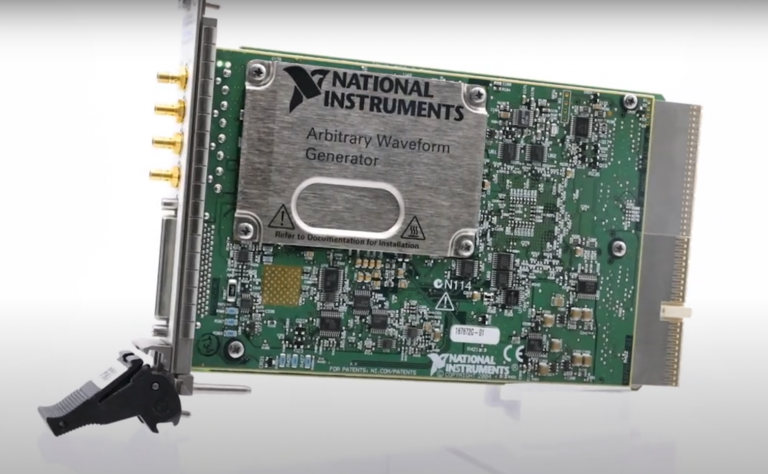
Listen to this blog post here. The National Instruments PXI-5441 is a powerful PXI waveform generator designed...
October 25, 2024







As the demand for environmentally conscious solutions grows, so does the complexity of clean energy systems. Solar power, smart tech, and even wind turbines all pose unique challenges for testing environments. The accuracy of real-time data acquisition is vital for these clean energy industries, and many companies are relying on modular NI hardware to address their data recording and validation needs. Let’s take a look at how two different industries are utilizing NI DAQ and CompactRIO hardware to power the future of clean energy.
KEY TAKEAWAYS FROM THIS POST:
• CompactRIO and LabVIEW were used to create a custom DAQ platform for small wind turbines, compliant with international standards.
• Data-driven design optimization allows manufacturers to optimize the efficiency, capacity, and integrity of their operations.
• cRIO FPGA, LabVIEW, and DAQ modules allowed for seamless integration of PV, BEMS, HEMS, and BESS modules in a fully functional microgrid setup.
• The FGPA-based design of the microgrid streamlined debugging, allowed for direct sensor interfacing, and made it easier to deploy logic.

NI Hardware Used:
cRIO-9014, NI 9234, NI 9219, NI 9205
The Problem:
Aresse Engineering, a testing and monitoring company based in Spain, was tasked with gathering and assessing the data required by international standards to confirm the functionality of small-scale wind turbines. The data gathered would be given to the turbine manufacturer to make any changes necessary to optimize their design.
The Solution:
Aresse Engineering partnered with Kliux Energies, a wind turbine manufacturer known for its proprietary and patented “vertical-axis wind turbine” technology. Kliux’s focus on custom distributed energy solutions was a perfect complement to Aresse Engineering’s goals.
Together, these powerhouse companies set to work on creating a custom system that used NI’s CompactRIO platform as a base. The system was defined by data from four distinct subsystems:
• Reference Condition, which used a cRIO-9014 controller to gather data about the humidity, temperature, pressure, and wind speed to determine how much energy the turbine could produce.

• Operational, which paired an NI 9234 sound and vibration input module with a G.R.A.S. microphone and a PCB tri-axial accelerometer for predictive machine condition monitoring. A PT-100 RTD Sensor was also used in this subsystem to deliver temperature info to an NI 9219 C Series module.
• Loading, which used a single NI 9205 to gather data from several sensors along the rotor and the tower to ensure that the aerodynamic loads matched the analytical design. In addition, an NI 9219 analog input module conditionalized the axial load and bending moments of the tower.
• Electrical Parameters, which assessed overall performance of the turbine by using magnetic sensors at the generator and the inverter to compute the generation of electrical energy with a second NI 9205 module
In terms of software, the system used a custom application built using NI LabVIEW. In the end, Aresse Engineering and Kliux Energies were able to leverage the powerful versatility of NI’s modular platforms to successfully monitor and evaluate the performance of small-scale wind turbines to satisfy market demands.

NI Hardware Used:
cRIO-9082, PS-15, NI 9225, NI 9401, NI 9227, USB-6215
The Problem:
The Laboratory for Clean Energy Research, part of Nanyang Technological University‘s School of Electrical and Electronic Engineering, is home to the Microgrid Energy Management System (MG-EMS) prototype. This award-winning prototype integrates with NI hardware to enable real-time control of load and generation management.
With an ever-growing need to efficiently manage the energy flow of modern electrical grids, the focus of researchers is on renewable energy sources, energy storage systems, and smart home devices. While traditional grid infrastructures lack flexibility, the team from Nanyang Technological University made it their mission to combine the microgrid with Home Energy Management Systems (HEMS) and Building Energy Management Systems (BEMS), allowing the system to demonstrate the functionality of a next-generation smart grid.
The Solution:
A Storage System for Battery Energy
The team from Nanyang Technological University began their approach to this challenge by finding a way to extend the lifespan and dependability of an FPGA-based battery energy storage system (BESS). This was accomplished by first connecting a cRIO-9082 controller to a PS-15 power supply. This controller was essential to the system, as it managed both digital I/O channel and voltage sensing functions. Every second, an NI 9225 voltage input module and an NI 9401 digital module operated each battery’s parallel switch and assessed its voltage.
In terms of software, a Xilinx interface was used to deploy a LabVIEW-developed balancing algorithm to the controller’s FPGA. This algorithm included three modes; manual balancing, passive, and automatic.
A Maximum Power Point Tracking System
The team also developed a Maximum Power Point Tracking (MPPT) system using NI 9225 and NI 9227 C Series modules. This system could directly measure Photovoltaic (PV) voltage and current, which is the technology that converts sunlight into electricity using solar cells. Both instantaneous voltage and current were used to implement the MPPT.

The MPPT was implemented with the “Perturb-and-Observe” technique, which is a method that perturbs the PV system by increasing the array operating voltage and measuring the impact on the array’s output power.
Demand Response Management for BEMS
The researching team created their own real-time Building Energy Management System that was able to monitor, manage, and control every load and energy source installed in a commercial building. By integrating the BEMS with communication and control hardware components (including the USB-6215 and NI-VISA interface), the system was capable of performing Demand Response Management (DRM). The DRM was broken into three functions; load shedding, VSD control, and “sump pump scheduling”.
A ZigBee Based Home Energy Management System
For the Home Energy Management System, the team was able to build a ZigBee-based system that was comprised of a smart meter, an Ethernet-ZigBee gateway, and a SCADA (Supervisory Control and Data Acquisition). The database and software modules were all created using LabVIEW. The system allowed users to manage or track how much energy their devices (such as intelligent blinds and smart lighting) used via load control modules (LCMs).
The seamless integration of these systems allowed for real-time control, energy savings, and advanced demand response management. By using NI DAQ modular hardware and LabVIEW programming, the team from Nanyang Technological University successfully created a fully functional smart grid system—complete with BESS, MPPT, and BEMS components.
A monthly email packed with valuable content—industry news, tutorials, obsolescence updates, and more. No sales pitches, just insights we think you'll find helpful!
Listen to this blog post here. The National Instruments PXI-5441 is a powerful PXI waveform generator designed...

Click here to listen to this post. Companies in almost every industry are being transformed...
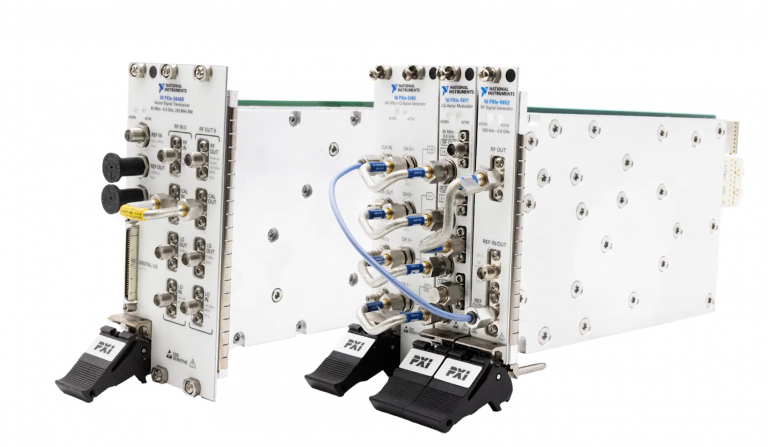
Listen to this post here. The PXIe Platform from National Instruments offers an incredibly valuable toolset for...

Click here to listen to this post instead. It is no secret that simulation and...